
ISSN: 2158-7051
====================
INTERNATIONAL JOURNAL OF
RUSSIAN STUDIES
====================
ISSUE NO. 9 ( 2020/2 )
|
|
ISSN: 2158-7051 ==================== INTERNATIONAL JOURNAL OF RUSSIAN STUDIES ==================== ISSUE NO. 9 ( 2020/2 ) |
INFORMATION WAR IN UKRAINE BEFORE AND AFTER THE DONBAS CONFLICT
IBRAHIM MURADOV*
Summary
Information is one of the most essential components of the ongoing hybrid war in Ukraine. It is a critical mechanism for perception management which directs the masses for certain goals. This article mainly composed of two parts. The first part concentrates on media discourses in Ukraine in the pre-war period. Understanding this period is a vital issue which shows how narratives about the Donbas territory contributed for isolation of the territory from the rest of Ukraine. The second part focuses on Russia’s information war in Ukraine. The research argues that domestic factors (mainly media and political leaders) which constructed a perception about "exclusiveness" of the Donbas region before 2014 are exploited by Russian media during and after the Euromaidan period to support its Hybrid War in Ukraine. Key Words: Information War, Ukraine Crisis, Hybrid War, Domestic Factors, Russian Federation, Donbas Conflict. Introduction According
to Vedomosti newspaper, Vladimir Putin signed a decree awarding orders
and medals to a large group of employees of the Russian media. For Vedomosti,
Decree No. 269 “On awarding state awards of the Russian Federation”, was signed
on April 22, but was not publicly announced. According to the decree, media
workers were awarded “for high professionalism and objectivity in covering
events in the Republic of Crimea,” a person who saw this document spoke to Vedomosti.
According to him, more than 300 people were awarded, including about 90
correspondents. The scale of the awards is unprecedented, the official says.
For example, even after the events of 2008 in South Ossetia, President Dmitry
Medvedev awarded only 11 journalists.
In
fact, media framing is crucial in guiding readers and shaping their mindsets. In
this sense, the importance of the media has increased even more in digital age.
According to Tankard et al. media frame can be described as: “the central
organizing idea for news content that supplies a context and suggests what the
issue is through the use of selection, emphasis, exclusion, and elaboration.”[2] Media, which
has the power to influence communities and soldiers in wars, emerged as one of
the most devastating weapons in the Donbas Conflict too. For, Ulrik Franke,
“information warfare is about achieving goals, e.g. annexing another country,
by replacing military force and bloodshed with cleverly crafted and credibly
supported messages to win over the minds of the belligerents.”[3] Chief of the
Staff of the Russian Armed Forces, General Valery Gerasimov describes the
information warfare as: “Informational confrontation opens up broad asymmetric
possibilities for reducing the enemy’s combat potential.”[4]
In the light of the above-mentioned explanations, this
article aims to get a closer look at the information war in Ukraine. The
research particularly examines narratives which Ukrainian media consolidated
before the conflict in Donbas erupted and thereby it associates their
contributions to the isolation of the Donbas territory form the rest of
Ukraine. After that, the paper investigates how Russian media uses the
discourses which have already formed by the Ukrainian media before the
destabilization of the Donbas territory.
Information War Before
the Donbas Conflict
Information war about the Donbas territory existed even
before the war began in the region. Since the independence of Ukraine,
region-centric discourses prevailed the political landscape of the country. The
main discourses were ‘Ukrainian Nationalism’ versus ‘Patriotism of Donbas’
which concentrated on two districts: L’viv and Donetsk respectively. In this
context, while ‘Ukrainianization’ policy is welcomed in the former one, it
always goes down like a lead balloon in the later one. Writing before the
conflict erupted in Donbas, Sergey Pakhomenko and Maria Podybaylo warned how
dangerous could be to reconstruct Donbas to ‘general cultural pattern’. The
authors pointed out: “one should carefully treat the region’s specificity and
reject the very idea of imposing such irritating symbols as Organization of
Ukrainian nationalists, Bandera[5], the Ukrainian
Rebellion Army[6], etc. One
should look for the uniting factors in the present time instead of looking for
them in the past.”[7]
The
binary characteristics of L’viv and Donetsk also refers two different
viewpoints. Representing Ukrainianness L’viv usually symbolizes Europeanness
while Donetsk patriotism portraits Sovietness and thereby
‘pro-Russian standpoint’. These antipodes also produced several myths about
each other. One side presented itself as a region preserving ‘Donbas Soviet
identity’ and accused the other side as being ‘fascists’ who forced
Ukrainization policy in Donbas. The other side portraited Donbas elites as
‘Moscow puppets’, ‘bandits’ and ‘mafia’ and Donbas residents as ‘lumpenized’ or
‘marginalized’.[8] Moreover, this antinomy could also be seen by
the fact that people in L’viv speak mainly in Ukrainian, while Donetsk
residents prefer to speak in Russian. The distinctiveness between Donetsk and
L’viv also reflected in voters’ political preferences. For instance, Viktor
Yanukovych, a candidate from Donetsk received 8.6 percent of votes in L’viv
district during presidential election in 2010 while the candidate gained more
than 90 percent of votes in Donetsk region.[9]
Indeed,
political and cultural dichotomy between the West and the East of Ukraine
existed even in 1994 presidential election and reinforced during and after 2004
presidential campaign. During the 1994 presidential election, Leonid Kuchma who
promised to increase relations with the Russian Federation was supported mainly
by the East of Ukraine while Leonid Kravchuk received major votes from the West
of the country due to his anti-Russian campaign. Of course, it is hard to
detect where the East or the West of Ukraine start. In this context, Peter
Rogers who attempted to deconstruct the generalization of East and West
dichotomy in Ukraine emphasized that there is not a rigid ‘border’ between
these two parts of Ukraine. Instead, distinctiveness of East and the West is
fluid and complicated.[10] Nevertheless,
a crystal-clear disparity between Donbas and Halytchina (westernmost territory
of Ukraine) is obvious. Therefore, it would not be wrong to compare these two
regions of Ukraine.
Media
discourses are an important factor which contributed to the construction of
dichotomy between the West and the East of Ukraine. Mass media from both sides
played a significant role in formation of ‘Ukrainian
Nationalism’ versus ‘Patriotism of Donbas’ discourses. To understand how media
deepened the polarisation between the West and The East of Ukranians, the
publications of Golos Donbass (one of the Donbas local newspapers)
during the 2004 presidential election campaign, can be informative. In general,
the newspaper evaluated the presidential competition between Viktor Yanukovych
and Viktor Yushchenko as a zero-sum game.
In their article, Ararat and Alexandr drew attention
to the publications of Golos Donbass
(Voice of Donbas) during 2004 election.
This local newspaper was very active which used a separatist language to
consolidate ‘us’ and ‘other’ profiles between the voters. For example, Golos Donbass published articles under
following titles: “Ukrainian Fascism-The
Terrible Truth, The Second Round: The
East against the West, Ukraine Has
Split, Who Will Win?... Where Is Your
Character, Donbass?”[11] The newspaper
also insulted Western voters of Ukraine in an article by stating: “You have not
expected such a result for the first round, dear reader, have you?... The low
political literacy of many western Ukrainians played a role. They answered the
question, ‘why are you giving your vote to Yushchenko?’ by saying, ‘Well,
everyone does.”[12] Local media appealed
not to trust ‘Orange’ channels. Indeed, people in the region already had have a
distrust of TV channels such as Channel 5, UT-1, 1+1 or Inter just like the way
how supporters of Orange Revolution did not trust TRK Ukraine.[13]
Indeed, before 2004 presidential election, the tendency
for separatism among Donbas people was low. According to a research conducted
in 2004, 71 percent of participants from Donetsk agreed with the following
statement: “The unity of Ukraine is more important than the needs of separate
regions”.[14] Comparing with
the year of 1994 (only 44.5 percent of participant agreed) the idea of
remaining intact was quite high which started to change again during the Orange
Revolution with the help of mass media.[15]
Throughout
the campaign, Golos Donbassa newspaper described Yushchenko as a fascist
and compared directly with Adolf Hitler. For instance, on the eve of
2004 presidential elections, an article entitled ‘Ukrainian Fascism-Terrible
Truth’ was published in the newspaper Golos Donbassa. After describing
the activities of the OUN-UPA (Organization of Ukrainian Nationalists and Ukrainian
Insurgent Army) against Polish minority groups between 1943 and 1945, the
article drew attention to the current nationalist organizations. The anonymous
writer linked the today’s fascist groups to Yushchenko.[16] As shown in the Picture 1, the newspaper
identifies Yushchenko with Hitler and asks the readers: ‘Does the nation need a
new Führer?’[17]
Golos
Donbassa shares another news, that can be seen in Picture 2,
with a split map of Ukraine along Dnieper river and asks: ‘Where is Your
Character Donbass?’ The article points out that mainly the low political
literacy of Western Ukrainians had played critical role during the first round
of the election. To show the low political literacy of Yushchenko supporters,
the article claims that most of the Western Ukrainians answers the question,
‘Why are you supporting Yushchenko?’ by responding, ‘Well, everyone does.’[18]
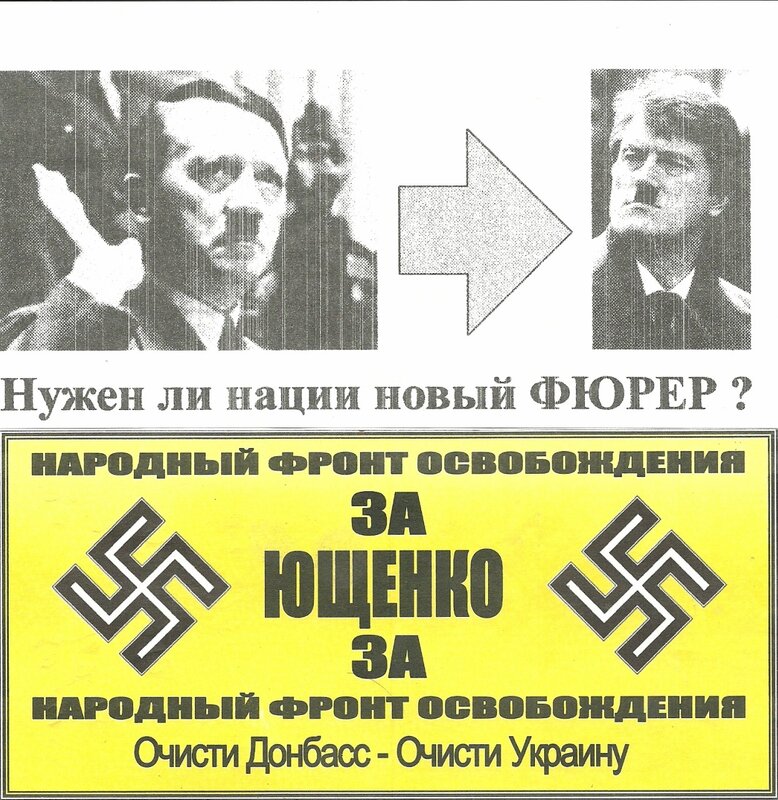
Picture 1. Defaced Image of Viktor
Yushchenko during 2004 Presidential Election in Ukraine
Source: Денис
Казанский, Политическая
агитация — 2004. Донбасс.,
accessed June 15, 2019, http://deniskazansky.com.ua/политическая-агитация-2004-донбасс/
After
the first-round of 2004 presidential election, another article titled ‘The
Second Round: The East against the West” appeared in Golos Donbassa. The article states:
Voting in the first round confirms the development of the events under the scenario: ‘candidate of the East against the candidate of the West.’ Eastern and most of the central regions of Ukraine gave their votes to Yanukovych while western Ukraine voted for Yushchenko. A clear geographic split takes place based on the principle of distance from Russia and United Europe.[19]
In
fact, though the presidential polls revealed that the people from both regions
see the other as adversaries and try to impose their own order on each other,
the both regions’ people acquire knowledge about the other mostly through local
media.[20]
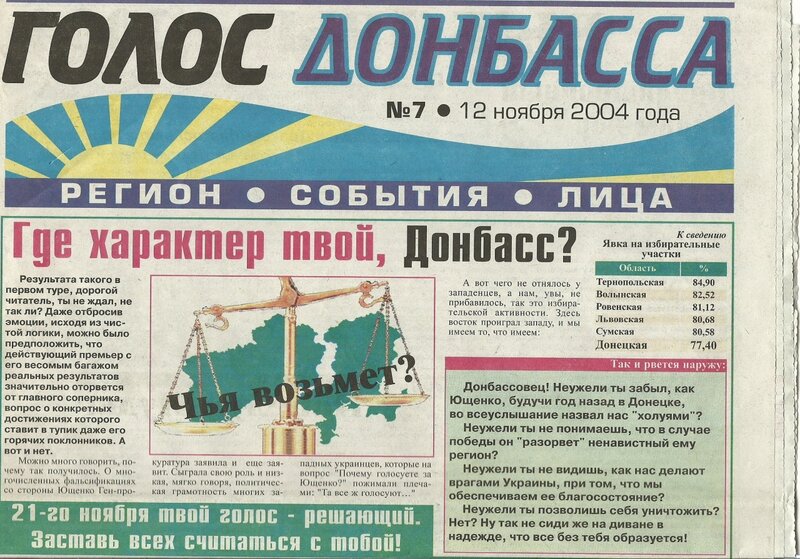
Picture 2. A Provocative Headline in Golos Donbassa
Source: Денис
Казанский,
“Политическая
Агитация-2004. Донбасс.,”
Блог Дениса
Казанского, 2011., accessed
June 15, 2019,
http://deniskazansky.com.ua/политическая-агитация-2004-донбасс/
Writing
in the website Obkom, journalist Alexey Mironov claims that local elites
and journalists contribute in formation of Donbas identity.[21] In his speech
Viktor Yanukovych stated:
Donetsk region, its wonderful people have long become the embodiment of the best in Ukraine, a brilliant symbol of what we, as a people, are able to achieve...Together we want to see the Donetsk region ... where we are free to celebrate our holidays and celebrate our history, as we understand it, and not in the way that someone dictates.[22]
Obviously,
Yanukovych’s emphasize on separate holidays and history was merely contributing
the exclusiveness of Donbas region. Another Donetsk journalist, Oleg Izmaylov had
an interview with editor-in-chief of the ‘Newspapers in Donetsk’ Yevgeny
Yasenov in 2008. Yasenov is one of the most prominent local historians of
Donetsk. Comparing people from two regions of Ukraine, Yasenov states:
I was in L’viv last year - people are completely different there. Evil, caustic, though more intelligent. But you don’t get the pleasure of communicating with them. There are, of course, exceptions - but we are talking about average values. If we compare it with L’viv, only ‘warm’ people live in Donetsk. But, for example, in Dnepropetrovsk or Odessa - the same ‘warm’, if not better.[23]
Mironov,
the Obkom correspondent quotes an article of
Rimma Fil, a Donetsk journalist who was an editor-in-chief of The Donetsk
News. In her article Fil writes about her impressions of meeting Western
Ukrainians in 2003. According to Obkom correspondent, Fil concludes her
article as: “And the country is small but the difference between us, as the
classic used to say, is of enormous size. All the power of anger and hatred for
us, the Donbas people, I felt every second and every hour. They, intelligent
people, just spewed anger when they themselves started talking about you and
me.”[24] Miranov also
takes another quotation from the Donetsk journalist: “We are workers. We need
deeds ... Our Donbas, where people mine heat by their sweat and blood for the
entire country, where people gnaw out the future for themselves and their
children. Calm. Peaceful. Where people are used to work hard, but not to reap
someone’s harvest.”[25]
The
Obkom correspondent, Alexey Mironov, draws attention to the texts of Yevgeny
Yasenov and Rimma Fil to show how journalists and historians contribute the
stereotypes about Donbas people. As seen in the quotation, Yasenov emphasizes
how different L’viv and Donetsk people are from each other. According to him
the former is ‘evil’, ‘caustic’ and ‘intelligent’ while the latter is ‘warm’,
‘hard working’ and ‘not reaping someone’s harvest’ for Rimma Fil. Moreover, Ms.
Fil points out that how much Western Ukrainians are hateful to the inhabitants
of Donbas. In fact, Rimma Fil is merely one of the journalists who wrote such
highly manipulative article about Donetsk people. Nevertheless, it should be
noted that during the interview with Yevgeny Yasenov, Izmaylov tries his best
to receive a confirmation of ‘Donbas exclusiveness’. Yasenov, on the other
hand, tries not to be part of or not to reinforce the local myths about Donbas.
At the end, Donetsk journalist, Oleg Izmaylov had to admit Yasenov’s realist
view about Donetsk. Yasenov concludes the interview as: “I want Donetsk to be a
world city, and not the capital of Donbas. This is my dream.”[26]
The
Donetsk journalist, Oleg Izmaylov, also asked several Donetsk people including
journalists and scientists if they consider Donetsk (Donbas) as a special place.
Igor Farmazyan, one of the Donetsk journalists who answered Izmaylov’s
question, said: “With Ukraine’s independence, Donetsk (Donbas) did receive the
status of a special place. This status was imposed on us, first of all, by Kyiv
and Galicia, and then the rest of Ukraine accepted. They began to tell the
myths about us and then the creators themselves then willingly believed. In
this mythology, the Donbass was the land of ‘scared billionaires,’ and the land
of ‘depressed miners,’ and the nest of ‘domestic separatism,’ and, of course,
the ‘gangster hangout’.”[27] Alexander Naumov,
a resident of Donetsk answers Izmaylov’s question conspicuously:
Territorially, the Donbass as a partial autonomy should be part of the Russian Federation.Even for historian Orest Subtelny, the Donbas was not a part of the history of Ukraine. I would advise the New Nazi-Ukrainian 'historians' to reflect on this in their attempts to create a common national idea. There will never be a revolution here, because people are used to thinking in terms of money and family, and not the ethnic community. Therefore, yes, I consider Donbass a special place.[28]
Alexander
Chalenko, a journalist who left Donetsk and worked in Kyiv before immigrating
to Russia, also responds Izmaylov’s question in a very radical way. In this
context, Chalenko responds as:
Donetsk is the capital of ‘alternative Ukraine’, ‘another Ukraine’, ‘Russian Ukraine’... In Donetsk, you need to change everything - first of all, the architectural appearance...It is necessary to sponsor the local culture - writers, artists, philosophers, architects, musicians, and so on. We must create our own mythology, write a story of Donbas.[29]
These
are among the other respondents of Oleg Izmaylov’s question: ‘Do they consider
Donetsk (Donbas) a special place? And if so, why?’ After evaluating the
respondents’ comments, Izmaylov came up with the conclusion of Donbas’s
exclusiveness. He emphasizes that respondents “confirmed the reputation of
Donbas people, as people accustomed to think critically and somewhere even with
healthy European skepticism. Probably, after all, the mining and industrial
culture, in the midst of which we all grew up, has a peculiar influence.”[30] To show how
regional media contribute to the polarization of Ukrainians, Pakhomenko and
Podybaylo present some quotations from local newspapers:
The nationalist propaganda very well prints in Galitchina residents’ mentality, which hates half-carved hints, in the mentality which sees things black and white: the friends are all here and the enemies are all there. It is They who is to blame for our poor living standards. Eliminate them! And your life will become better.’ ‘Galitchina residents direct their energy towards ‘national upbringing’ of the Ukrainians. They want to see Ukraine as ‘a big Galitsia’. They convince others that hate for the Muscovites and for the Russians is the distinctive feature of ‘the truly Ukrainian citizen’. They explain to ‘the eastern pseudo-Ukrainians’ that they are also Ukrainian, spoilt by Russification.[31]
In
order to understand historical identity of the West and East Ukrainians,Viktoria
Sereda analyses two local news newspapers: Vysokyi Zamok and Donetskiie
Novosti. Sereda investigates articles Vysokyi Zamok and Donetskiie
Novosti published during the period of 1994-2004 focusing on following
notions: holidays, personalities, main periods and events and the image of
Other.[32] In her
research, Sereda finds out huge gap between L’viv and Donetsk people and claims
that this difference is unlikely to be closed in the near
future. For instance, the newspaper interpreted Soviet holidays from two
opposed perspective. The articles published in Donetskiie Novosti mostly
praised the Victory Day while publications of Vysokyi Zamok proclaimed
the Victory Day as the day of Soviet occupation. One of the articles of Vysokyi
Zamok comments about the Victory Day as:
For twenty years, from 1945 to 1965, during Stalin’s and Khrushchov’s rule 9 May was an average working day. It was not by chance. There was nothing to celebrate. The USSR was heavily defeated and doomed to ruination. Victory Day should be proclaimed a mourning day in memory of the victims of the bloodiest war in a history.[33]
In
this context, Donetskiie Novosti published articles focusing on the
veterans’ memories describing the horrors of Nazis while Vysokyi Zamok
published articles titled ‘Liberators or occupiers?’, ‘I remember not fights in
L’viv, but screams of nuns’.[34] Thus,
Sereda’s research also shows us how regional media reproduce the discourse
about historical identity of two regions of Ukraine.
Apart
from regional level, it is also interesting how the discourses about Donbas
presented at the national media. In this regard, Yulia Abibok compares articles
from three newspapers written in 2010, after the presidential election in
Ukraine. Abibok elaborates articles from Ukrayinska Pravda, Obkom
and Zerkalo Nedeli and claims that for all of these newspapers, Donbas
people have a special definition. For instance, ‘donetskiye’ for Ukrayinska
Pravda means people who are pro-Russian or anti-Ukrainian. Some of
correspondents from Zerkalo Nedeli agree with these definitions.
However, for Obkom journalists, ‘donetskiye’ means people who involved
in criminal affairs and have mafia style behavior and habits.[35]
In
general, Donbas regional media adopted myths and stereotypes about Donbas.
Abibok claims that there are Soviet (‘hard-working people’, ‘positive
exclusiveness of Donbas identity’, ‘feeding the entire Ukraine’) and modern
(mafia or bandit-style) stereotypes connected to Donbas people and local media
goes along with these. The website Obkom
clarified the frequently used words in order to describe Donbas people. Those
words are: ‘super suit-Adidas’, ‘brazing torch’, ‘yoot’, ‘gang’, ‘dons’,
‘thug’, ‘tough guy”. The Obkom also drew attention to the Yanukovych’s
criminal past by referring Donbas characteristic.[36]
In
their articles, journalists from Ukrayinska Pravda mainly focused on the
pro-Russian elites and the division of Ukraine as West and East. The
correspondents point out that the elites from both sides deliberately
contribute further polarization of the regions. An article from Zerkalo
Nedeli newspaper directly remarks the characteristics of Donbas inhabitants
by pointing Yanukovych. The article states:
Yanukovych is not afraid of violent motions because they are natural for him. People of this temper, men descending from this region do not engage in self-reflection. Many of them have behind them a rough and fairly specific experience of a primitive capital accumulation.[37]
Paraphrasing
Yulia Abibok, it can be said that not only regional media promoted ‘Donbas
exclusiveness’ but also national media contributed it along with the
politicians and other elites. Donbas regional media adopted myths and
stereotypes about Donbas and reproduced them.
Under these circumstances, it can be concluded that
the information war about Donbas existed in Ukraine before the Donbas conflict
erupted. Since the independence of Ukraine, politicians and elites along with
the local and national media reinforced the myths related Donbas people and
Donbas region itself. All these efforts contributed in formation of Donbas
exclusiveness. Analyses of pre-Donbas conflict discourses in Ukraine shows us
that Information War before the Donbas Conflict based mainly on the comparison
of the West and the East of Ukraine.
The next section explores the information war that began with the eruption of the war in the Donbas region. The main difference between these two periods in terms of information war is that in the latter one, the war does not occur between the West and the East of Ukrainians. Instead, Russia took the position of the East Ukrainians in the post-2014 period and utilized the narratives which were composed within Ukraine before 2014.
Russia’s
Information War Against Ukraine
Russian Media
As
mentioned in previous section, an informational war existed in Ukraine before
the conflict erupted in Donbas. Historical myths about Donbas and the Western
Ukraine reproduced and even the polarization between these two camps was
deepened particularly during presidential elections by politicians, elites and
local and national media. In this sense, Russian media adopted and reinforced
the narratives about the West and the East of Ukraine which hace already formed
in Ukraine. Olexandr Osipian summarizes the argument which Russian mass media
used to describe the situation in Ukraine after Euromaidan as:
Since ‘neo-Nazis’ and ‘Russophobes’ had seized power in Kyiv, the rights and indeed the lives of Russians in Ukraine were now under threat, and since Ukrainian statehood had ceased to exist, the Russian state and Russian people (both individually and collectively) must do everything possible to defend ethnic Russians, Russian-speakers and ‘compatriots’, defined in the broadest possible terms, from Ukrainian ‘neo-Nazis’ (‘banderites’, ‘Right Sector’).[38]
Russian
media emphasizes a number of different myths and narratives that are mostly
related to the Second World War, the Ukrainian nationalists of the 1940s,
particularly Stepan Bandera. On the contrary, they magnify the images of Soviet
period as the ‘glorious’ years. It should be noted that such propaganda became
very common in the Russian media since Vladimir Putin came to power. Russian
media aimed particularly to disparage the Kyiv authorities after the ousting of
Yanukovych and presented them as illegal, corrupt, and fascist junta.[39] Besides, the
Ukrainian military forces and its volunteer troops are “often compared to Einsatztruppen
(executions squads), Nazis, killers, terrorists, bandits, and servants of the
Kyiv junta. Ukraine is portrayed as a failed state, or a puppet of NATO and
Western countries.”[40] Concepts related to World War II constantly
were produced by Russian media. In order to humiliate Ukrainians, they used
terms such as Maidanjugend, which is a reformulation of the Hitlerjugend
(Hitler Youth).[41]
In
fact, Russian media goes hand in hand with the discourses of the Russian
authorities. For example, Russian Foreign Minister, Sergei Lavrov called the
Euromaidan demonstrators as Nazis. For Lavrov, they were Nazis who were
marching in Kyiv as well as other Ukrainian cities.[42] Moreover,
President Putin defined the Ukrainian military operation in Donbas as: “Sadly,
this reminds me of the events of the Second World War, when the fascist German
troops surrounded our cities, in particular Leningrad, and fired directly on
the settlements and their inhabitants.”[43] Apart from
calling the Euromaidan demonstrators ‘fascists’, the mainstream Russian media
links the Ukrainian Crisis with the external threats. Russian media calls both
the USA and the EU as aggressors and fascists.
Additionally, Russian media has used the Orthodox Church as a part of
information campaign against Ukraine. Articles about how Ukrainian army looting
churches, killing priests, and civilians appeared in Russian media.[44] Moreover, the
Ukrainian government is depicted as Satanists or servants of evil.[45]
As
a matter of fact, Russian leadership is well aware of the power of mass media.
In this regard, Foreign Policy Concept of 2013 emphasized the significance of
information war. Kremlin declared that it must “create instruments for
influencing how it is perceived in the world, develop its own effective means
of information influence on public opinion abroad and counteract information
threats to its sovereignty and security.”[46] In order to
convey its perspective to other countries, Russian government heavily supports
media resources.
Yevhen
Fedchenko, Director of the Mohyla School of Journalism in Kyiv, describes
Russia’s view on information war:
For the Kremlin, propaganda has become an integral part of information warfare. Throughout the past decade the Russian propaganda machine has been structured and effectively implemented, reaching a climax during the occupation of Crimea and the subsequent devastating war in Eastern Ukraine. It started in 2005 with the creation of Russia Today (subsequently RT) and every year more ‘media’ outlets are added to this global network. According to Sputnik International, “Sputnik points the way to a multipolar world that respects every country’s national interests, culture, history and traditions” ...In reality, their aim is to influence global public opinion, distort reality and act as a mouthpiece for the Kremlin.[47]
In
order to weaken Ukrainian influence, first, all the Ukrainian TV channels were
stopped in the Autonomous Republic of Crimea on March 9, 2014. Instead, Russian
TV channels began broadcasting in the peninsula. The inhabitants of
Crimea were allowed to watch programs of the First Channel, Russia 24, NTV,
TNT, STS and Russia 1 along with local channels.[48] Following the
annexation of Crimea in conjunction with the Euromaidan events, Donbas became prime
target of Russian media. In this case, one of the first acts of militants in
Donbas was to restore the broadcast of Russian TV channels.[49]
Kristiina
Müür et al. analyze the publications of Komsomolskaya Pravda, Regnum,
and TV Zvezda, online news channels, to reveal how they contribute to
Russian information campaign in construction of negative image of Ukraine. As known,
Moscow officials reject the claims that Russia is a party in the Donbas War. In
this sense, Komsomolskaya Pravda refers to the Donbas crisis as a local
insurgence against post-Euromaidan Ukrainian government. On the other hand, Regnum,
and TV Zvezda treat the conflict with geopolitical references. The news
channels frequently blamed the USA, NATO, the West and Ukraine for the conflict
in Donbas.[50]
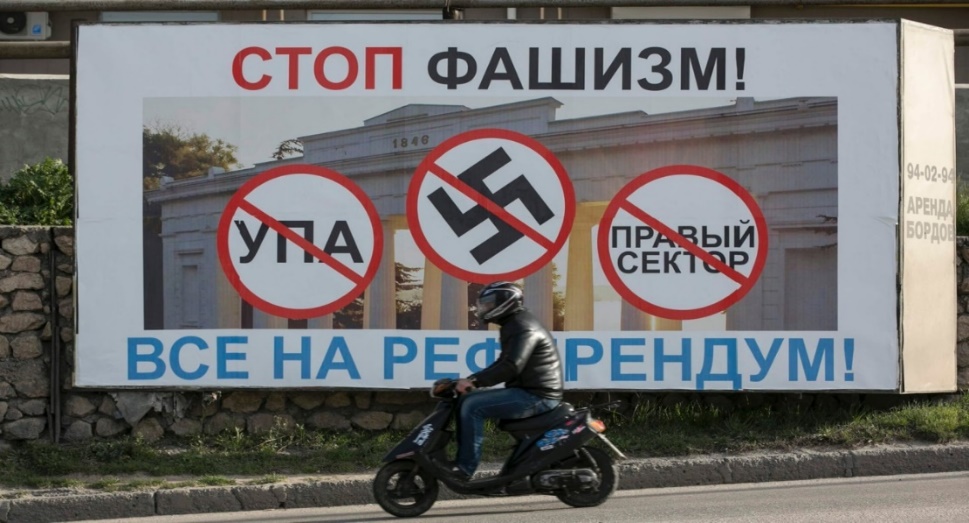
Picture 3. Stop Fascism! Everybody to Referendum!
Source: The Guardian, accessed June 25,
2019, https://www.theguardian.com/world/2014/mar/17/crimea-crisis-russia-propaganda-media
The study of Kristiina Müür et al. also present which
groups in Ukraine were the main target of Komsomolskaya Pravda, Regnum,
and TV Zvezda. According to the research, Regnum, and TV
Zvezda focus on Ukrainian government and compare it with Nazis. Komsomolskaya
Pravda, on the other hand, not only associate Ukrainian government with
Nazis but also Ukrainian armed forces. The newspaper frequently emphasized
violence and terror of Ukrainian government against its people. Furthermore,
Ukrainian government was accused of conducting a genocide against
Russian-speaking population.[51] The
journalists of Komsomolskaya Pravda depicted Ukrainian soldiers and
volunteers as rapist and children killers as well as drug addicts, criminals,
robbers, cowards and alcoholics. Moreover, they often portrayed Ukrainian
forces as homosexuals or incapable of fighting. In contrast, the newspaper
gushes over Igor Girkin and Alexander Zakharchenko, the former leaders of the
self-proclaimed People’s Republics of Donetsk and Luhansk. They are portraited
as heroes, fighting against ‘fascists Ukrainian forces’.[52]
Sputnik is another
influential news agency which contribute Russia’s information war against
Ukraine. Just like Komsomolskaya Pravda, Sputnik also aims to
discredit Ukrainian soldiers and calls them neo-Nazis in its publications. For
example, some of the headlines of Sputnik
newspaper are as follows: ‘Drunk Ukrainian Soldier Shot His Colleagues in
Donbas’,[53] ‘Ukrainian Soldiers
Who Refused to Fight Killed Their Commanders’,[54] ‘Neo-Nazi
Right Sector Connects to the Ukrainian Army’,[55] ‘The Neo-Nazi
Azov Battalion Now Gives the Children a Gun’.[56] As can be
seen in the headlines, Sputnik not only relates Ukrainian soldiers with
fascists or Nazis but also emphasizes how the Kyiv officials uses children as
soldiers in the Donbas Conflict. Moreover, the newspaper belittles the
Ukrainian army by pointing out that Ukrainian soldiers are drunk and killing
each other.
Along with Sputnik, Russia Today is
another tool of Russian Federation to use as a propaganda means against
Ukraine. Russia Today also frequently matches Ukrainian army with Nazis.
Similar to the news of Sputnik, the publications of Russia Today also
refers Ukrainian soldiers or Euromaidan supporters as fascists and a simple
puppet of the West. In its articles, the newspaper also emphasizes the failure
of Euromaidan event. Particularly during the anniversaries of Euromaidan event,
Russia Today draws attention to widespread corruption in Ukraine. In
this regard, one of its news headlines appeared as: ‘Four years after
‘Euromaidan,’ Corruption is Still King in Ukraine.’[57]
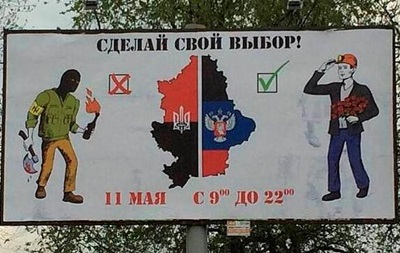
Picture 4. “Make Your Choice”
Source: “Референдумы в ЛДНР: Как уплывал Донбасс,”
Корреспондент.net,
2016, accessed August 30, 2019,
https://korrespondent.net/ukraine/3681653-referendumy-v-ldnr-kak-uplyval-donbass
As
it is seen, Russian media not only named the Euromaidan as ‘fascist movement'
but also it frequently connected it with the ‘Great Patriotic War’. Hence,
Russia presents itself as struggler against ‘fascist’ or ‘junta’ regime in
Ukraine and thereby positions itself as a true defender of ‘Western values’ or
‘liberator of Europe’. In general, ‘fascism’ was a common term for Russian
media to describe Euromaidan movement. Another term was karateli which
Russian media frequently referred to describe Ukrainian forces. Karateli
is a term used for describing Nazis atrocities against
civilians. This is another way of Russian media to portrait Ukrainian
army. In contrast, the Russian mass
media praises pro-Russian militants in Donbas by using the term ‘militia’ which
is preferred by the insurgents as well.[58]
Social Media
Apart
from mainstream news channels, Russia also uses social media as an effective
tool for perception management. The most
effective social networks used to shape public opinion in Russia are: Livejournal,
VKontakte, Twitter and Facebook. These are social networks
which are used by people to share their stories, exchange ideas etc. Therefore,
it should be clarified how people can contribute Russia’s information war
against Ukraine. In fact, spreading news in digital world is faster than ever.
However, not always people decide what to share in social networks. In today’s
world, the trolls mostly perform this task. In general, troll is
a person who raises a certain event on social media and directs it to a specified
request.[59]
Describing
trolling as: “posting of incendiary comments with the intent of provoking
others into conflict”[60] is common
among scholars. However, it is not easy to distinguish a troll from ordinary social
network users because the abovementioned definition can fit any internet user.
According to Robert Szwed, the most
distinctive characteristics of trolls are that “these are people acting to
order, obtaining remuneration for work done, which, in the case of organized
trolling, is posting messages and comments portraying certain people and events
in a particular light, using selected, modified facts in, to them, suitable
contexts.”[61]
Szwed
separates trolls activities into three phases: luring, taking the
bait and hauling in. In the first stage, the troll makes a
controversial comment in order to draw the audience’s attention. In the second
stage, a person is anticipated to response the first comment which is mostly
done by another troll. At the last stage, the trolls distort the content of the
article and thus the first post, commenting on individual statements, which
makes the discussion antagonistic.[62] These are the
general characteristics of trolls and their working methods.
Although
it is hard to detect who involve in trolling activity who is not, there are
strong arguments that Russia uses trolls to manage public perception. According
to Alexandra Garmazhapova, a correspondent of Novaya Gazeta, internet
trolls are operating in specially equipped offices in St. Petersburg and
Moscow, who praise Vladimir Putin and discredit certain leaders or their
counters.[63] For Garmazhapova,
following announcement appeared in social networks in late August 2013:
Internet operators are required! Work in a luxurious office in OLGINO!!!! (m. Old Village), payment 25 960 per month. Task: posting comments on specialized Internet sites, writing thematic posts, blogs, social networks. Screenshots reports. Work schedule is selected individually < ... >. Payment is weekly, 1180 per shift (from 8.00 to 16.00, from 10.30 to 18.30, from 14.00 to 22.00). PAYMENTS WEEKLY AND FREE FOOD!!! Employment official or under the contract (at will). Learning is possible!”[64]
Viktor
Rezunkov, a correspondent of Radio Liberty, explains where Kremlin
trolls are sitting and what they are doing. For Rezunkov, in St. Petersburg, in
the village of Olgina, and also in the city itself, on Savushkin’s street,
there is a mysterious organization in the building number 55, which is
officially called the Internet Research Limited Company, and is unofficially
nicknamed by its employees, the so-called ‘Kremlin trolls’, ‘the Ministry of
Truth’.[65]
In
the ‘Truth Ministry’, there are about 400 people who write in social networks
such as ‘Live Journal’ or ‘VKontakte’ to create a positive image of Vladimir
Putin or other Russian officials and discredit Ukraine, the USA, the EU and the
Russian opposition.[66] The Kremlin
Trolls became overwhelmingly active in July-August 2014. Hashtags such as
‘#fascism’, ‘#novorossiia’, ‘#junta’ or
‘#SaveDonbassFromUkrainianArmy’ were used the
most in the context of the crisis in Ukraine. Disinformation was widespread in
social networks particularly in 2014-2015. For example, in May 2014, a photo
(see Picture 5) allegedly from Donbas portraying a crying girl sitting in front
of her murdered mother was popular in Twitter and VKontakte. In fact, the photo
was stolen from a movie titled The Brest Fortress, co-produced by
Belarus and Russia in 2010.[67]
When
pro-Russian activists died in a fire at the Trade Unions House in Odesa, Igor
Rozovskiy who claimed to be doctor, posted on Facebook claiming that Ukrainian
nationalist groups disallow him to help the wounded people. Rozovskiy’s post shared
on Facebook more than two thousand times and also was translated into different
languages. However, the Facebook account belong to Igor Rozovskiy was created
just before the post was shared. Such fake accounts were prevalence during
2014-2015 due to the escalation of the war. It is clear that the mobility of
troll accounts changes according to the course of the war. Therefore, Russian
trolls published most of their tweets in 2014-2015.[68]
The
record of 900 thousand tweets in the second quarter of 2014 coincided with the
escalation of the conflict in eastern Ukraine. Russian trolls were particularly
active during the disaster of the Malaysian Airlines Boeing-777, which
performed the MH17 flight from Amsterdam to Kuala Lumpur. The flight was shot
down on July 17, 2014 in Donbas. On board there were 298 people, all of
them died. According to a study by the Dutch magazine De Groene Amsterdammer
after the analysis of nine million tweets posted by employees of St. Petersburg
‘troll factory’, which is officially called ‘Internet Research Agency’, two
days after the MH17 flight was shot down, the Russian ‘troll factory’ has
published more than 65 thousand tweets accusing Ukraine due to the catastrophe.[69]
The
study shows that right after the crash, troll factory published 40,931 tweets
using hashtags such as #KyivSibilBoying, #KyivProvokatsiya and #KyivKkazhiPravdu. Most of the posts were in Russian. According
to the magazine, the campaign lasted less than 24 hours.[70]
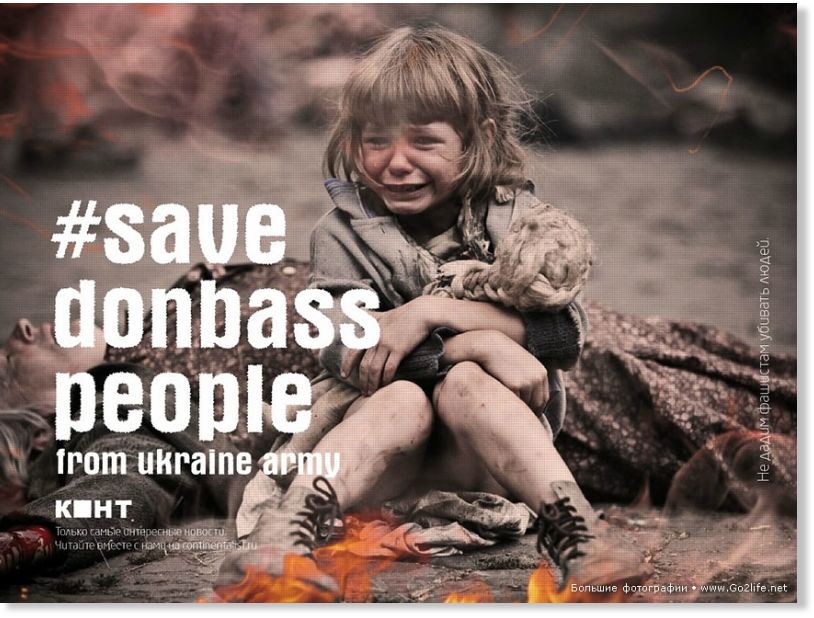
Picture 5. A Photograph Used by Russian Trolls as A
Propaganda Tool
Source: Eric Zuesse, “Ukraine government admits to
targeting civilians in Donbass region,” accessed June 26, 2019, https://www.sott.net/article/292240-Ukraine-government-admits-to-targeting-civilians-in-Donbass-region
Euromaidan
Press divides the tactics of Russia’s information war into
two camps: Raising the morale of Russians and demoralizing Russia’s opponents.[71] In first
case, pro-Kremlin mass media and the ‘troll factory’ emphasize the strength of
Russian army while ridiculing the enemy. For example, on one hand, they were
emphasizing the superiority of Russian army or Russia’s role in security of
Ukraine to show the capacity of Russian army and its protective role in
Ukraine’s sovereignty. On the other hand, they were publishing news about
weakness of Ukrainian army or incapability of Ukraine as an independent country
to discredit the country. In second case, Russian information tools aim to convince
the ‘enemy’ that it is doomed to fail. Publications with the headlines showing
some crisis in the relations between Ukraine and the EU or the failure of Eastern
Partnership program for Ukraine were the samples of the latter case.[72]
Conclusion
To
conclude, it can be said that ‘information war’ as one of the components of the
hybrid war which Russia conducts against Ukraine was not totally a new
phenomenon in post-Maidan period in Ukraine. In other word, the information war
before the destabilization of Donbas territory was taking place within Ukraine.
Hence, the process was contributing in polarization of the East and the West of
Ukraine which was reproducing the myths about Donbas exclusiveness. In this
sense, both national and local media along the politicians and elites played
‘quite well’ to strength or accelerate the isolation of Donbas people from the
rest of Ukraine. On one side, local media of Donbas region used terms such as
‘fascists’, ‘Nazis’ or ‘the puppets of the West’ who force Ukrainization policy
in Donbas. On the other side, media in the West of Ukraine described the Donbas
as ‘bandits’, ‘mafia’ or ‘Moscow puppets’. After all, both sides did nothing
but reciprocatively contribute to the region’s isolation.
In
this sense, the article also analyzed how Russia conducts information war
against Ukraine. First, it showed that Kremlin backed Russian mass media plays
critical role in information war. News channels and newspapers such as Sputnik,
Russia Today, Komsomolskaya Pravda, Russia 24, or Russia 1 are
among the other information tools of Russia. Besides, Moscow also uses social
networks effectively in order to manage public perception or to discredit Ukraine.
Russia began to use its ‘troll army’ particularly after Euromaidan event to
justify both its annexation of Crimea and involvement in Donbas though Moscow
officially denies its involvement in the war. However, as the article detailed,
the concepts such as ‘fascist’, ‘Nazis’, ‘Bandera’, ‘the puppet of the West’,
‘Bandits’, ‘Mafia’, ‘Moscow puppets’ and etc. were common before and after the
conflict in Donbas. The main difference between these two periods are that the
first part took place within Ukraine and consolidated those concepts while the
second period occurred between Ukraine and Russia. Thus, this article showed
that the rhetoric which Russian media utilized overwhelmingly during the
conflict in Donbas were in fact formed before the conflict started. Therefore,
this research concludes that domestic factors constructed conditions which are
exploited by Russian media during and after the Euromaidan period in Ukraine.
[1]Ксения Камышев, Дмитрий Болецкая, "За Взятие Крыма", Ведомости, 2014, accessed June 16, 2019,
[2]Nataliya Roman, Wayne Wanta, and Iuliia Buniak, "Information Wars: Eastern Ukraine Military Conflict Coverage in the Russian, Ukrainian and U.S. Newscasts,” International Communication Gazette 79, no. 4 (2017): 2-3.
[3]Vladimir Sazonov and Kristiina Müür, "Russian Information Warfare against Ukraine I: Online News and Social Media Analysis", in Russian Information Campaign against the Ukrainian State and Defence Forces, ed. Vladimir Sazonov, Kristiina Müür, and Holger Mölder (NATO Strategic Communications Centre of Excellence, 2016), 67.
[4] Герасимов Валерий, "Ценность Науки в Предвидении Новые Вызовы Требуют Переосмыслить Формы и Способы Ведения Боевых Действий", Военно-Промышленный Курьер, 2013, https://www.vpk-news.ru/articles/14632.
[5] Stepan Bandera, leader of the Organization of Ukrainian Nationalists.
[6]Armed band of the Organization of Ukrainian Nationalists, during the Second World War and the first decade of postwar period.
[7]Sergey Pakhomenko and Maria Podybaylo, "‘Ukrainian Nationalism’ Vs ‘Patriotism of Donbas’: The Withstand of The Media Images in the Contemporary Information Space of Donetsk District", Almanach Via Evrasia, 2013, 2, accessed June 12, 2019, http://www.viaevrasia.com/en/22-ukrainian-nationalism-vs-patriotism-of-donbas-the-withstand-of-the-media-images-in-the-contemporary-information-space-of-donetsk-district-sergey-pakhomenko-maria-podybylo.html.
[8]Yuliya Abibok,"The Construction of Donbas Regional Identity in Political and Media Discourses: Implications of the Conflict", in Multicultural Societies and Their Threats, ed. Nazarii Gutsul and Kristina Khrul (Zürich: LIT Verlag, 2017)., 61.
[9]Andrii Portnov, "The Arithmetic of Otherness: ‘Donbas’ in Ukrainian Intellectual Discourse", Eurozinene, 2017, accessed June 12, 2019, https://www.eurozine.com/the-myth-of-the-two-ukraines/.
[10] Peter Rogers, "Division, Difference and Diversity: Regionalism in Ukraine", Україна Модерна 12, no. 2 (2007), 210, accessed June 13, 2019, http://uamoderna.com/arkhiv/47-122.
[11]
Ararat L. Osipian and Alexandr L. Osipian, "Why Donbass Votes for Yanukovych: Confronting the Ukrainian Orange Revolution", Demokratizatsiya 14, no. 4 (2006): 495–517., 504-505.
[12]Osipian and Osipian., 509.
[13]Osipian and Osipian.
[14]Andrew Wilson, “The Donbas in 2014: Explaining Civil Conflict Perhaps, but Not Civil War,” Europe-Asia Studies 68, no. 4 (2016): 639.
[15]Wilson, “The Donbas in 2014: Explaining Civil Conflict Perhaps, but Not Civil War,”.
[16]
Osipian and Osipian, “Why Donbass Votes for Yanukovych: Confronting the Ukrainian Orange Revolution.”, 505.
[17]Денис Казанский, “Политическая Агитация — 2004. Донбасс.,” Блог Дениса Казанского, 2011, accessed June 14, 2019, http://deniskazansky.com.ua/политическая-агитация-2004-донбасс/.
[18]Казанский.
[19]Osipian and Osipian, “Why Donbass Votes for Yanukovych: Confronting the Ukrainian Orange Revolution.”, 505.
[20]Abibok, “The Construction of Donbas Regional Identity in Political and Media Discourses: Implications of the Conflict.” 61.
[21]Алексей Миронов, “От Пальмы Мерцалова Далеко Не Падают - II,” Обком, 2008, accessed June 13, 2019, http://ru.obkom.net.ua/articles/2008-04/23.1254.shtml.
[22]Евгений Косячков, “Янукович Уже Не Считает Народ Донбасса «воплощением Самого Лучшего в Украине». Другие Продолжают Так Думать (Обновлено),” Обком, 2007, accessed June 13, 2019, http://ru.obkom.net.ua/articles/2007-07/06.1430.shtml.
[23]
Олег Измайлов, “Евгений Ясенов: ‘Я Очень Хочу, Чтобы Донецк Был Городом Мира, а Не Столицей Донбасса,’” Live Journal, 2008, accessed June 14, 2019, https://tattarrin.livejournal.com/5554.html.
[24]Миронов, “От Пальмы Мерцалова Далеко Не Падают - II.”
[25]Миронов.
[26]Измайлов, “Евгений Ясенов: ‘Я Очень Хочу, Чтобы Донецк Был Городом Мира, а Не Столицей Донбасса.’”
[27]Олег Измайлов, “За Родину! За Сталино! Дончане Говорят о Донецке,” Live Journal, 2008, accessed June 14, 2019, https://tattarrin.livejournal.com/3730.html#comments.
[28]Измайлов.
[29]Измайлов.
[30]Измайлов.
[31]Pakhomenko and Podybaylo, “‘Ukrainian Nationalism’ Vs ‘Patriotism of Donbas’: The Withstand of The Media Images in the Contemporary Information Space of Donetsk District.”, 4-5.
[32]Viktoria Sereda, “Regional Historical Identities and Memory Since,” Україна Модерна 12, no. 2 (2007), June 14, 2019, http://uamoderna.com/arkhiv/47-122.
[33]Viktoria Sereda, “Regional Historical Identities and Memory Since,” Україна Модерна 12, no. 2 (2007), 72, accessed June 16, 2019, http://uamoderna.com/arkhiv/47-122.
[34]Sereda, “Regional Historical Identities and Memory Since,”, 73.
[35]Abibok, “The Construction of Donbas Regional Identity in Political and Media Discourses: Implications of the Conflict.”, 70.
[36]Abibok., 71.
[37]Abibok., 72.
[38]
Olexandr Osipian, “Historical Myths, Enemy Images and Regional Identity in the Donbass Insurgency (Spring 2014),” in Russian Media and the War in Ukraine, ed. Julie Fedor (Stuttgart: ibidem-Verlag, 2015), 113.
[39] “Пропаганда Кремля. Росія Загострює Зловживання Інформацією,” Радіо Свобода, 2016, accessed August 11, 2019, https://ua.krymr.com/a/27901740.html.
[40]Sazonov and Müür, “Russian Information Warfare against Ukraine I: Online News and Social Media Analysis.”, 69.
[41] “Людей Заставляют Врать, Что Их Бомбили Ополченцы,” Комсомольская Правда, 2014, accessed June 17, 2019, https://www.kompravda.eu/daily/26278.4/3155601/.
[42]H. Reisinger and A. Golts, “Russia’s Hybrid Warfare: Waging War below the Radar of Traditional Collective Defence,” Reseach Paper, no. 105 (2014), 5.
[43]“Всероссийский Молодёжный Форум «Селигер-2014»,” Kremlin.ru, 2014, accessed June 17, 2019, http://www.kremlin.ru/events/president/news/46507.
[44]
Анастасия Новикова, “Украинские Националисты Планируют Карательную Акцию Против Священников,” Комсомольская Правда, 2014, accessed June 17, 2019, https://www.kompravda.eu/daily/26294/3172487/.
[45]Николай Варсегов, “В души украинских правителей вселился дьявол,” Комсомольская Правда, 2014, accessed June 17, 2019, https://www.kompravda.eu/daily/26283/3161165/
[46]Stephen Hutchings and Joanna Szostek, “Dominant Narratives in Russian Political and Media Discourse During The Ukraine Crisis,” in Ukraine and Russia: People, Politics, Propaganda and Perspectives, ed. Agnieszka Pikulicka-Wilczewska and Richard Sakwa (Bristol: E-International Relations Publishing, 2015), 184.
[47]Yevhen Fedchenko, “Debunking Lies and Stopping Fakes: Lessons from the Frontline,” Stop Fake, 2016, accessed June 18, 2019, https://www.stopfake.org/en/debunking-lies-and-stopping-fakes-lessons-from-the-frontline-2/.
[48]
“В Крыму Начали Вещание Российские Телеканалы,” TASS, 2014, accessed June 18, 2019, https://tass.ru/mezhdunarodnaya-panorama/1033291.
[49]Sakwa, Frontline Ukraine: Crisis in the Borderlands, 150.
[50]
Sazonov and Müür, “Russian Information Warfare against Ukraine I: Online News and Social Media Analysis.”, 73-74.
[51] Vladimir Sazonov, 82-83.
[52] Vladimir Sazonov, 95-86.
[53]
“Sarhoş Ukrayna Askeri, Donbass’ta Görev Arkadaşlarını Vurdu,” Sputnik, 2019, accessed June 25, 2019, https://tr.sputniknews.com/avrupa/201906141039368676-sarhos-ukrayna-askeri-donbassta-gorev-arkadaslarini-vurdu/.
[54] “Savaşmayı Reddeden Ukraynalı Askerler Komutanlarını Öldürdü,” Sputnik, 2019, accessed June 25, 2019, https://tr.sputniknews.com/avrupa/201905121039026643-savasmayi-reddeden-ukraynali-askerler-komutanlarini-oldurdu/.
[55]“Neo-Nazi Sağ Sektör, Ukrayna Ordusuna Bağlanıyor,” Sputnik, 2015, accessed June 25, 2019,https://tr.sputniknews.com/avrupa/201504031014805556/.
[56]“Neo-Nazi Azov Taburu Şimdi de Çocukların Eline Silah Verdi,” Sputnik, 2015, accessed June 25, 2019, https://tr.sputniknews.com/foto/201508141017147744/.
[57] “Four Years after ‘Euromaidan,’ Corruption Is Still King in Ukraine,” Russia Today, 2018, accessed June 25, 2019, https://www.rt.com/op-ed/419603-ukraine-maidan-poroshenko-eu/.
[58] Elizaveta Gaufman, “Memory, Media, and Securitization: Russian Media Framing of the Ukrainian Crisis,” in Russian Media and the War in Ukraine, ed. Julie Fedor (Stuttgart: ibidem-Verlag, 2015), 151-154.
[59]Claire Hardaker, “Trolling in Asynchronous Computer-Mediated Communication: From User Discussions to Academic Definitions,” Journal of Politeness Research 6, no. 2 (2010), 224.
[60]Hardaker, “Trolling in Asynchronous Computer-Mediated Communication: From User Discussions to Academic Definitions,”.
[61]Robert Szwed, “Framing of the Ukraine-Russia Conflict in Online and Social Media,” NATO Strategic Communications Centre of Excellence, 2016, 55.
[62]Szwed, “Framing of the Ukraine-Russia Conflict in Online and Social Media,” 56-57.
[63]Александра Гармажапова, “Где Живут Тролли. Как Работают Интернет-Провокаторы в Санкт-Петербурге и Кто Ими Заправляет,” Новая Газета, 2013, accessed June 26, 2019, https://www.novayagazeta.ru/articles/2013/09/09/56265-gde-zhivut-trolli-kak-rabotayut-internet-provokatory-v-sankt-peterburge-i-kto-imi-zapravlyaet.
[64]Гармажапова.
[65]
Віктор Рєзунков, “«Кремлівські Тролі» Розповіли Про Себе: Де Сидять і Чим Займаються,” Радіо Свобода, 2015, accessed June 26, 2019, https://www.radiosvoboda.org/a/26903778.html.
[66]Рєзунков.Рєзунков.
[67]Ulises A. Mejias and Nikolai E. Vokuev, “Disinformation and the Media: The Case of Russia and Ukraine,” Media, Culture and Society 39, no. 7 (2017) 7.
[68]Mejias and Vokuev, “Disinformation and the Media: The Case of Russia and Ukraine,”.
[69]
“Катастрофа МН17 На Донбасі: Сплив Гучний Доказ Провини Росії,” Obozrevatel, May 2019, accessed June 26, 2019, https://www.obozrevatel.com/ukr/crime/katastrofa-mn17-na-donbasi-spliv-guchnij-dokaz-provini-rosii.htm.
[70]“Катастрофа МН17 На Донбасі: Сплив Гучний Доказ Провини Росії.”
[71] “A Guide to Russian Propaganda. Part 4: Russian Propaganda Operates by Law of War,” Euromaidan Press, 2017, accessed August 12, 2019, http://euromaidanpress.com/2017/12/15/a-guide-to-russian-propaganda-part-4-russian-propaganda-operates-by-law-of-war/.
[72] “A Guide to Russian Propaganda. Part 4: Russian Propaganda Operates by Law of War,” Euromaidan Press, 2017, accessed June 26, 2019, http://euromaidanpress.com/2017/12/15/a-guide-to-russian-propaganda-part-4-russian-propaganda-operates-by-law-of-war/.
Bibliography
A Guide to Russian Propaganda. Part 4: Russian Propaganda Operates by Law of War. Euromaidan Press, 2017. http://euromaidanpress.com/2017/12/15/a-guide-to-russian-propaganda-part-4-russian-propaganda-operates-by-law-of-war/.
Abibok, Yuliya. The Construction of Donbas Regional Identity in Political and Media Discourses: Implications of the Conflict. In Multicultural Societies and Their Threats, edited by Nazarii Gutsul and Kristina Khrul. Zürich: LIT Verlag, 2017.
Fedchenko, Yevhen. Debunking Lies and Stopping Fakes: Lessons from the Frontline. Stop Fake, 2016. https://www.stopfake.org/en/debunking-lies-and-stopping-fakes-lessons-from-the-frontline-2/.
Four Years after ‘Euromaidan,’ Corruption Is Still King in Ukraine. Russia Today, 2018. https://www.rt.com/op-ed/419603-ukraine-maidan-poroshenko-eu/.
Gaufman, Elizaveta. Memory, Media, and Securitization: Russian Media Framing of the Ukrainian Crisis. In Russian Media and the War in Ukraine, edited by Julie Fedor. Stuttgart: ibidem-Verlag, 2015.
Hardaker, Claire. Trolling in Asynchronous Computer-Mediated Communication: From User Discussions to Academic Definitions. Journal of Politeness Research 6, no. 2 (2010): 215–42. https://doi.org/10.1515/JPLR.2010.011.
Hutchings, Stephen, and Joanna Szostek. Dominant Narratives in Russian Political and Media Discourse During The Ukraine Crisis. In Ukraine and Russia: People, Politics, Propaganda and Perspectives, edited by Agnieszka Pikulicka-Wilczewska and Richard Sakwa. Bristol: E-International Relations Publishing, 2015.
Mejias, Ulises A., and Nikolai E. Vokuev. Disinformation and the Media: The Case of Russia and Ukraine. Media, Culture and Society 39, no. 7 (2017): 1027–42. https://doi.org/10.1177/0163443716686672.
Neo-Nazi Azov Taburu Şimdi de Çocukların Eline Silah Verdi. Sputnik, 2015. https://tr.sputniknews.com/foto/201508141017147744/.
Neo-Nazi Sağ Sektör, Ukrayna Ordusuna Bağlanıyor. Sputnik, 2015. https://tr.sputniknews.com/avrupa/201504031014805556/.
Osipian, Ararat L., and Alexandr L. Osipian. Why Donbass Votes for Yanukovych: Confronting the Ukrainian Orange Revolution. Demokratizatsiya 14, no. 4 (2006): 495–517.
Osipian, Olexandr. Historical Myths, Enemy Images and Regional Identity in the Donbass Insurgency (Spring 2014). In Russian Media and the War in Ukraine, edited by Julie Fedor. Stuttgart: ibidem-Verlag, 2015.
Pakhomenko, Sergey, and Maria Podybaylo. ‘Ukrainian Nationalism’ Vs ‘Patriotism of Donbas’: The Withstand of The Media Images in the Contemporary Information Space of Donetsk District. Almanach Via Evrasia, 2013. http://www.viaevrasia.com/en/22-ukrainian-nationalism-vs-patriotism-of-donbas-the-withstand-of-the-media-images-in-the-contemporary-information-space-of-donetsk-district-sergey-pakhomenko-maria-podybylo.html.
Portnov, Andrii. The Arithmetic of Otherness: ‘Donbas’ in Ukrainian Intellectual Discourse. Eurozinene, 2017. https://www.eurozine.com/the-myth-of-the-two-ukraines/.
Reisinger, H., and A. Golts. Russia’s Hybrid Warfare: Waging War below the Radar of Traditional Collective Defence. Reseach Paper, no. 105 (2014): 1–8.
Rogers, Peter. Division, Difference and Diversity: Regionalism in Ukraine. Україна Модерна 12, no. 2 (2007). http://uamoderna.com/arkhiv/47-122.
Roman, Nataliya, Wayne Wanta, and Iuliia Buniak. Information Wars: Eastern Ukraine Military Conflict Coverage in the Russian, Ukrainian and U.S. Newscasts. International Communication Gazette 79, no. 4 (2017): 357–78. https://doi.org/10.1177/1748048516682138.
Sarhoş Ukrayna Askeri, Donbass’ta Görev Arkadaşlarını Vurdu. Sputnik, 2019. https://tr.sputniknews.com/avrupa/201906141039368676-sarhos-ukrayna-askeri-donbassta-gorev-arkadaslarini-vurdu/.
Savaşmayı Reddeden Ukraynalı Askerler Komutanlarını Öldürdü. Sputnik, 2019. https://tr.sputniknews.com/avrupa/201905121039026643-savasmayi-reddeden-ukraynali-askerler-komutanlarini-oldurdu/.
Sazonov, Vladimir, and Kristiina Müür. Russian Information Warfare against Ukraine I: Online News and Social Media Analysis. In Russian Information Campaign against the Ukrainian State and Defence Forces, edited by Vladimir Sazonov, Kristiina Müür, and Holger Mölder, 1–130. NATO Strategic Communications Centre of Excellence, 2016.
Sereda, Viktoria. Regional Historical Identities and Memory Since. Україна Модерна 12, no. 2 (2007). http://uamoderna.com/arkhiv/47-122.
Szwed, Robert. Framing of the Ukraine-Russia Conflict in Online and Social Media. NATO Strategic Communications Centre of Excellence, 2016.
Wilson, Andrew. The Donbas in 2014: Explaining Civil Conflict Perhaps, but Not Civil War. Europe-Asia Studies 68, no. 4 (2016): 631–52. https://doi.org/10.1080/09668136.2016.1176994.
В Души Украинских Правителей Вселился Дьявол. Комсомольская Правда, 2014. https://www.kompravda.eu/daily/26283/3161165/.
В Крыму Начали Вещание Российские Телеканалы. TASS, 2014. https://tass.ru/mezhdunarodnaya-panorama/1033291.
Валерий, Герасимов. Ценность Науки в Предвидении Новые Вызовы Требуют Переосмыслить Формы и Способы Ведения Боевых Действий. Военно-Промышленный Курьер, 2013. https://www.vpk-news.ru/articles/14632.
Всероссийский Молодёжный Форум «Селигер-2014». Kremlin.ru, 2014. http://www.kremlin.ru/events/president/news/46507.
Гармажапова, Александра. Где Живут Тролли. Как Работают Интернет-Провокаторы в Санкт-Петербурге и Кто Ими Заправляет. Новая Газета, 2013. https://www.novayagazeta.ru/articles/2013/09/09/56265-gde-zhivut-trolli-kak-rabotayut-internet-provokatory-v-sankt-peterburge-i-kto-imi-zapravlyaet.
Измайлов, Олег. Евгений Ясенов: ‘Я Очень Хочу, Чтобы Донецк Был Городом Мира, а Не Столицей Донбасса.’ Live Journal, 2008. https://tattarrin.livejournal.com/5554.html.
———. За Родину! За Сталино! Дончане Говорят о Донецке. Live Journal, 2008. https://tattarrin.livejournal.com/3730.html#comments.
Казанский, Денис. Политическая Агитация — 2004. Донбасс. Блог Дениса Казанского, 2011. http://deniskazansky.com.ua/политическая-агитация-2004-донбасс/.
Камышев, Дмитрий Болецкая, Ксения. За Взятие Крыма. Ведомости, 2014. https://www.vedomosti.ru/newspaper/articles/2014/05/05/za-vzyatie-kryma.
Катастрофа МН17 На Донбасі: Сплив Гучний Доказ Провини Росії.” Obozrevatel, May 2019. https://www.obozrevatel.com/ukr/crime/katastrofa-mn17-na-donbasi-spliv-guchnij-dokaz-provini-rosii.htm.
Косячков, Евгений. Янукович Уже Не Считает Народ Донбасса «воплощением Самого Лучшего в Украине». Другие Продолжают Так Думать (Обновлено). Обком, 2007. http://ru.obkom.net.ua/articles/2007-07/06.1430.shtml.
Людей Заставляют Врать, Что Их Бомбили Ополченцы. Комсомольская Правда, 2014. https://www.kompravda.eu/daily/26278.4/3155601/.
Миронов, Алексей. От Пальмы Мерцалова Далеко Не Падают - II. Обком, 2008. http://ru.obkom.net.ua/articles/2008-04/23.1254.shtml.
Пропаганда Кремля. Росія Загострює Зловживання Інформацією. Радіо Свобода, 2016. https://ua.krymr.com/a/27901740.html.
Рєзунков, Віктор. «Кремлівські Тролі» Розповіли Про Себе: Де Сидять і Чим Займаються. Радіо Свобода, 2015. https://www.radiosvoboda.org/a/26903778.html.
*Ibrahim Muradov - PhD in International Relations. Conducts his research on the Donbas Conflict through hybrid war concept ORCID ID: https://orcid.org/0000-0003-4045-0957 e-mail: muradovibrahim@gmail.com
© 2010, IJORS - INTERNATIONAL JOURNAL OF RUSSIAN STUDIES