
ISSN: 2158-7051
====================
INTERNATIONAL JOURNAL OF
RUSSIAN STUDIES
====================
ISSUE NO. 11 ( 2022/2 )
|
|
ISSN: 2158-7051 ==================== INTERNATIONAL JOURNAL OF RUSSIAN STUDIES ==================== ISSUE NO. 11 ( 2022/2 ) |
REFLECTIVE DOCTRINE ANALYSIS AND IMPACT ON THE INTERNAL AND FOREIGN POLICY OF THE REPUBLIC OF MOLDOVA
NICOLAE PARCEVSCHII*
Summary
In this article, the author highlights the importance of the analysis on the impact of reflexive games on the internal and foreign policy of the Republic of Moldova. Such analyzes are applied for the first time in our country regarding reflexive games. Until now, Moldova has been the subject and object of external reflexive applications. Advances in information technology are less visible and palpable for the reading public, which is not only a consumer of information, but also a subject and object of reflective informal technologies. Mathematics specialists model and create effective quantitative conflict management models. Experts in game theory and decision-making promote their own approaches in an increasingly wide range of fields (political, military, economic, etc.). But at the same time, the same specialists say that the individual is described too simplistically, the large sets and masses, with their properties, do not fit into mathematical models. One of the radical challenges for game theory and decision-making theory remains the need to develop the apparatus of reflection (first conceptually, then formally). Reflexive analysis refers to one's own awareness of the meaning of reflexive communication and interpersonal interaction. At the same time, the reflection as an object of research, since the introduction of this category by J. Locke, is considered entirely belonging to the fields: philosophy and psychology.
Key Words: Reflective, Game, Conflict, Innovative, Space, Cybernetics.
Introduction The present time is characterized by an unprecedented increase in the
volume of information flows, information technologies and the total
computerization of all spheres of human life. In recent decades, there has been
persistent talk of the transition from an «industrial society» to an «information society». There is a change in production methods in
the view of the world, of people, of their image of the environment.
Information technology is fundamentally changing the daily lives of millions of
people. Information has become one of the most important strategic, managerial,
human, financial and material resources. Production and consumption are the necessary basis for the efficient
functioning and development of the various spheres of social life and, especially,
of the economy. In modern conditions, the right to information and access to it
are of vital value to all members of society. The growing role of information
in society has become the subject of scientific research. New theories have
emerged that explain its place and significance. In his works prof. Vl. Lefevre
brings many considerations and possibilities to use reflective analysis. The
development of reflective analysis problems is necessary for solving many
informational applications. In such circumstances far too important is the
study of pheasalibites that ensures social peace for the country's population,
harassed by information overload. The concept of reflective control of
psycho-semantic, social, political and military spaces allows a new approach to
the value of information. For example, the sender of the information may send a
truthful message based on the fact that it will be received as a fake and vice
versa. If such an unusual deception succeeds, the opponent is harmed by
accepting the true or false message. All this takes place through the study of
human reflexes through access to mentality, auditory, visual, psycho-emotional
or kinesthetic irritants. In the local space, elements of reflective analysis appear for the first time
in 2017 in the publication «Irrenology. Military geography of Moldova. Study of Contemporary Moldova,
volume 333 pages». The utilitarian tasks of Reflective Game Theory is to make optimal
decisions in a conflict as a special socio-psychological phenomenon. Classical
game theory, which is essentially the basis of optimal decision theory, is
beginning to be understood as a theory capable of revealing the basic laws of
conflict management. Intellectual processes, which occur during the interaction
of complex systems, are not studied enough, because there are not enough
logical means to be explicit. Professor Vl. Lefevr considers that the creation
of such means is the main task of conflict theory, as a conflict is, first and
foremost, a conflict of way of thinking, perception and action. Conflict of
thought is manifested in many cases through social, political or physical
interaction (anomic conflict, street actions, civil-military conflict, military
conflicts, etc.). Therefore, in addition to the logical means of researching
intellectual activity, it is necessary to construct theoretical models of the
different «physical» interactions of conflicting systems. The
conflicting parties interact lexically-semantically with reflexive broadcasts,
where each party tries to influence situations of personal, interpersonal,
group, social, internal and external, or of major interest to information users
(country, social group and each individual – in partre). The final impact of the thesis is the wide involvement of political and
governmental factors in the theoretical-utilitarian study of the Theory of
Reflective Games at the initiation into higher state positions. This is
perfectly in line with the National Project: Strengthening the national
security system through knowledge and communication, 20.80009.0807.28 134-PS,
State Program (2020-2023). At the intersection of political science, philosophy, history, geography,
psychology there is a need for a new discipline - irenology, which is based on
the analysis of reflexive games in the socio-political space of the country,
primarily when referring to social peace, parliamentary elections or foreign
policy. This field is new for Moldova, all the more necessary in the presence
of a frozen conflict on the Dniester and which requires an insistent diplomatic
and political path, followed by multiple reflective applications. «The most effective method of irenology is to
possess the Theory of Reflective Games». The applied methodology Is based on the systemic approach through «Theory of active reflexive
environments for innovative development», by Vladimir Lepski,
doctor, prof. Un., Member of SA in Russia. In essence, it is a theory, which
concretizes to the maximum the theory of Prof. Vladimir Lefevr,
the emphasis being placed on the synergistic capacities of the individual, the
social group, the states, which through reflexive applications can be
operationally directed. It is necessary to mention that the theories of prof.
Vl. Lepski have entered the active arsenal and are
the basis of reflective applications in current Russian politics and
geopolitics. Reflective systems must be complex, mosaic, capable of self-organization.
So complexity forms chaos, and synergistic capacity
ensures the direction of chaos. V. Lepskii's theory
for the first time perceives man as an «informational-innovative, mechanical
system with emotional and cognitive properties, bio-cybernetic, able to
self-organize due to intellectual abilities and also a component part of the innovative-informational
system». Here is what Prof. Vl. Lepski writes in one of
his works: «The psychosemantic methods allow to
reconstruct the implicit picture of the specific world around the subject,
which he may not be aware of and which is updated in the consumption regime.
Semantic spaces can be conceived as the basis for structuring the reflexive
self-organization of the subject-human consciousness, as well as the
organization of the activity of the group of subjects». «The principle of bifurcation of the subjects ensures the dynamic
transformation of the individual in the subject of the virtual group, which
activates in accordance with other subjects and the active-innovative
environment». Professor Ig. Smirnov in his research transforms the psycho-semantic
space of a particular individual. Professor Vl. Lepskii
tends to change and reorganize the psycho-semantic spaces of some crowds, from
certain geopolitical spaces, through sophisticated information systems.
Moreover, he demands that the subjects receiving the initial impulse of
organization stay alone in the semantic spaces imposed from the outside. Thus we see that if prof. Vl. Lefevr
operates pre and post-factum in the semantic space of
geopolitics, prof. Vl. Lepskii progress in his
theories and work «here» and «now», in other words, the present time is a
subject of transformations. The bifurcation of the subjects, as a psychological
aspect, is no less than the transfer of bipolar accentuations from the sphere
of personality to the sphere of the self-organized and reflexive-directed
crowd. In this article we aim to analyze the situation regarding some aspects of
special acuity for the internal and foreign policy of the Republic of Moldova.
The study includes the aspects of reflective analysis of the
semantic-innovative space through the prism of the theories of professors V. Lefevr and V. Lepskii. The results of the investigation After we got acquainted with the theoretical bases of professors Vl. Lefevr and Vl. Lepskii, we
conclude that all events in domestic and foreign policy, international
relations can be calculated and predetermined, so that a superpower or group of
superpowers will be able to build new geopolitical, geoeconomic
and diplomatic realities, thus achieving their own goals. The creation of such a system began in the Republic of Moldova after April
7, 2009 and continues to this day. In fact, the construction of an innovative,
political-administrative fractal, a component part of the Russian
political-administrative system, has begun. After the 2020 parliamentary
elections, it is redirected to the Western geopolitical vector. The natural gas
crisis of 2021 demonstrated the efficiency of the Russian reflexive game and
the subsequent return of Moldova to the semantic space comfortable for Russia,
which fits perfectly into the theoretical paradigms set out by Prof. V. Lefevr and Vl. Lepskii. The information ecology in Moldova will be further managed by the
political factor, which determines the ways of self-identification of
individuals and social groups in the conditions of regional, geopolitical fluctuations
and economic crisis in autumn 2021 and its deepening in 2022. Incidence of Organizational Weapon in Moldova Human history
is full of ploys by which some have tried to mislead others or subdue them
directly or indirectly. The
organizational weapon is an invention and copyright exclusively of world
superpowers, which possess macro strategies called foresight, have advanced
economies and global techno-military performance. The reflexive aspect of the
organizational weapon is not in doubt and is a direct consequence of reflexive
applications. Within the
hybrid and asymmetric threats of the last decade, science is increasingly
distinguishing a new strategy, defined as an organizational weapon. The new
type of weapon denotes the historical trend of moving from weapons of mass
extermination to the category of self-disorganization and self-disorientation
of states and governments, in order to preserve the existing material base and
resources, or reshape geopolitical preferences. The application of this weapon
induces in the target state a deep political impact (blockage), which distorts
its own economic programs, making them ineffective. It distorts the foundations
of national culture and ethno-social cohesion, in order to facilitate the
emergence of the «fifth column». As a result, a situation of internal economic, psycho - social and
political chaos is established in the respective country. Such examples can be
found in the Romanian «revolution» of 1989, the Ukrainian square, the conflagration in Donbass, as well as
in all the «color revolutions» in the victimized countries, including Moldova 2003, 2009, 2016. The outbreak of
the Ukrainian crisis in 2014 and the annexation of Crimea took public opinion,
the press and Western officials by surprise. There were clear signs that Russia
could react militarily to the risk of losing any influence over Ukraine. No one
in the West suspected that Russia would simply and decisively annex Crimea and
trigger an armed conflict in Donbass. This demonstrated the inability of
Western political actors to anticipate or impede Moscow's aggressive conduct.
The Romanian military investigation bodies warned about the annexation of
Crimea, at least half a year before the completion of this operation. Vladimir
Putin devised this ploy and the «green men» peacefully took over Crimea, after which they
simulated a referendum. The Crimean referendum was organized with bureaucratic
and diplomatic fairness, but given the exceptional conditions in which it took
place, the real choice of the Crimean people remains to be perceived as a
successful reflexive game of the Kremlin in the geographical space of Ukraine.
Nothing new, Russia annexed a territory and started a civil war on the
territory of Ukraine, forming a new separatist zone. That is a frozen conflict
that has become an anchor capable of preventing Ukraine from drifting westward.
These issues had to be addressed by the then Ukrainian government, as did the
1992 military-political crisis and the 2021 economic crisis in Moldova. In this context
Victor Strâmbeanu, prof. Un. dr. general MApN Romania, reported: «What has not
yet been fully understood is that hybrid warfare serves the purpose of the
aggressor better than the one who defends himself. It can be said, without the
risk of making too many mistakes, that hybrid warfare is predominantly
offensive based on its very meaning and purpose, to achieve its objectives by
using camouflaged, covert, ambiguous methods and actions to avoid the
accusation of aggression». The Reflective Aspects of the Romanian-Moldovan Unionism If we refer to the
definition of nation, our personal attitude towards the problem of unionism is
realistic and pragmatic. The conclusion is that both banks of the Prut have
specific qualities for two nations, which speak a common language, but with a
different mentality. Although Germany and
Austria speak the same language and have common cultural features, it is their
mentality that distinguishes them by identifying with their own geographical
territory. It is the Moldavian-Slavonic mentality that forms the main drift
from the goals of an integral nation. This was amply demonstrated by Romanians
in December 1989, mining in 1990, 1991, 1999 and the events in February 2016.
Moldovans, on the contrary, since 2009 and until now, have demonstrated chronic
distortion of social perception at the ethnic level, and «the syndrome billion» put an end to this
statement. Romanian-Moldovan unionism, as ridiculous as it may seem, has its
origins in the 1960s, the Khrushchevite spring of the USSR, in the 15th century
in past, in the Lubeanca cabinets, against the background of acceptance, the
Carpathian project, promoted by US Secretaries of State Henry Alfred Kissinger
and Zbigniew Kazimierz Brzeziński. Subsequently, this concept was
preserved until the end of the 80's, being revived by the perestroika-gorbaciovista,
through the KGB projects «Baical» and «Dnestr». An important moment
of the unionist emancipation movement is that from the very beginning it was
directed and guided by the special services, moreover, the authentic unionists
were soon removed from the leadership of the national emancipation movement and
towards the beginning of the Dniester conflict since 1992, it has fully
enshrined Russia's regional and strategic goals. The 1992 Dniester military
conflict is a classic Russian reflexive military game. Its reflexive dynamics
can be easily deciphered in the chronology of the events of that time. Against the
background of the anomic state and massive corruption in the upper echelons of
the political class in Moldova, there is a stable dynamic of increasing the
number of followers of unionism among the population. The decoration of the
Moldovan unionists with the «Star of Romania» brought a reverse service to unionism, given the fact that the «professional unionists» were decorated, who
enslaved Eastern geopolitical interests. While the Kremlin was preparing the
Crimean anschluss, the unionists in Chisinau set up a center of political
tension, which diverted the attention of EU political opinion from Crimea. The
administration on the Red Square has shown excellent ingenuity in this case.
With the hands of T. Băsescu, he decorated the «professional unionists» from Moldova for
the participation in the geostrategic operation of annexation of Crimea. This
approach of T. Băsescu was perceived bipolar by the sincere unionists from
Moldova and can be conceived as a failure of T. Băsescu in the geostrategy
of unionism. In this order of
ideas, James Pettit declared on June 9, 2017, during the show «Peatniţa» from RTR-Moldova. «We have to take into
account what we (USA) and the EU are doing in the Republic of Moldova. As I
have already said, my country alone has already given Moldova over one billion
dollars (referring to the period 1991-2017) for the development of the state not
only economically, but also democratically. The European Union offered a
similar amount, but Russia? What did Russia give? Not only do they not have a
developed help program, but they still punish you, as is this embargo. That is
why we are surprised that, according to all the polls, it seems that more than
half of the population is pro-Russian. How do we explain that? It is very difficult
for us to understand». The comicality of this situation is obvious, but
it reflects V. Putin's tactics of resolving political and regional situations
from the financial account of other states, which arouses the admiration of his
followers in Russia and abroad. These examples once
again show us that the keys to the unionist movement are not only in Bucharest
or Chisinau, but also in the geopolitical centers of Germany, France, Turkey,
Austria and most importantly Russia. Some Moldovan
intellectuals are sincerely convinced that the Union deserves to be built to
get rid of the oligarchic reminiscences and the corrupt political class, but
there is a risk of a further civil and even regional war. The 2021
parliamentary elections showed that the doctrine of Romanian-Moldovan unionism
gave way to the concept of EU accession, although the EU Association Agreement
is not finalized at the level of state strategy and doctrine, and the actual EU
accession can be achieved only after 2050, as the official Brussels puts it.
The further promotion of the ideas of EU accession by the parliamentary
majority is another active reflection, meant to keep the electorate in its
sphere of influence. At the same time, the 2021 election campaign of the
alleged unionist parties demonstrated the absolute incompetence of the party
leaders. Case study on Romanian - Moldovan unionism The reflective analysis of
the perspectives of the union reveals the following situation: Romania. Order of importance
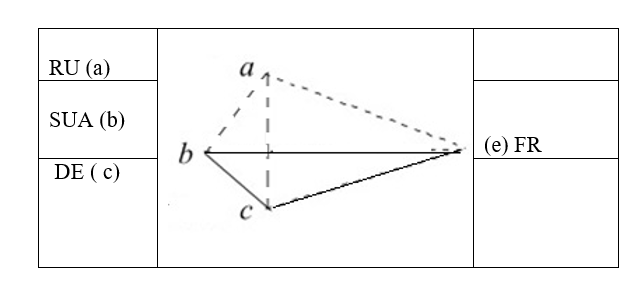
of states- Russia, USA, Germany, France, England ,. In the next graph, England
is eliminated as less important.
Figure 1. Order 1 of
the importance of states for RomaniaSource: made by the
researcher.
Figure 2. Order 2 of
the importance of states for RomaniaSource: made by the
researcher. And we already decompose this graph and for it
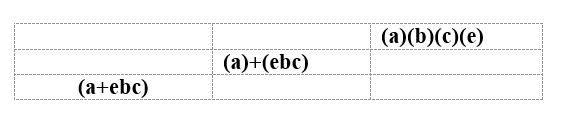
we find the polynomial a + ebc and the diagonal formula
Figure 3. Diagonal
formula of relationsSource: made by the
researcher. And the equation for Romania will be a + ebc Romania will ask the USA, Germany and France for an alliance and active
policy on the question of the Union. Russia will keep the free choice and
demand respect for a status-guo from the triple alliance. The triple alliance
will not be pleased with the Union's initiative and surrenders to Russia, it
will demand neutrality from Romania. The keys to the Union are in Moscow,
respectively. The future diplomatic and geopolitical effort of Romania and
Moldova must be directed towards Russia. The situation at the moment is
uncertain. Romania and Russia do not have active mutual diplomacy. Romania is
restricted in the free choice of alliances within the EU and NATO. Thus, Russia
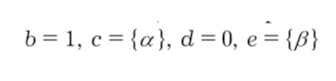
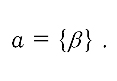
has the free choice to resolve the Union. The final equation for Russia a = 1 + ebc = 1. For Romania- 0 = a + ebc =
0.
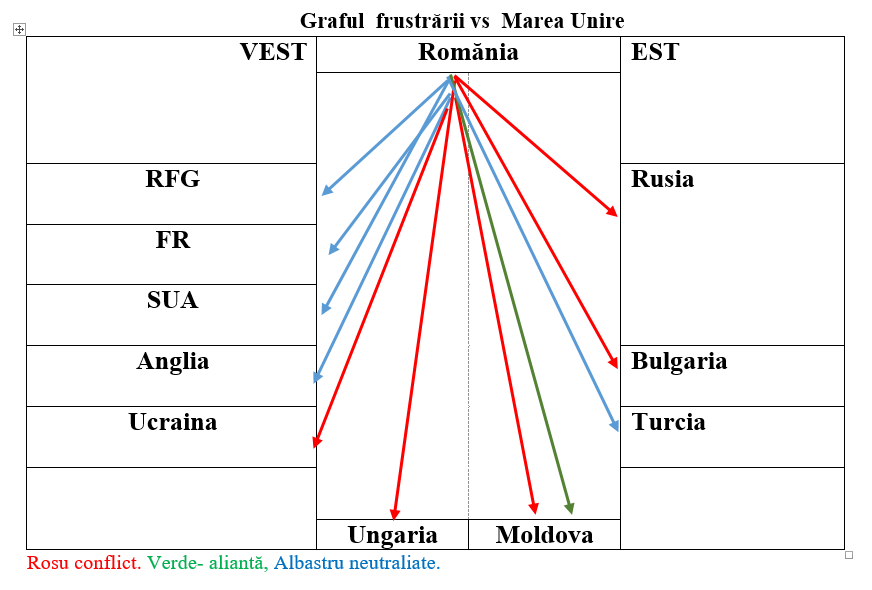
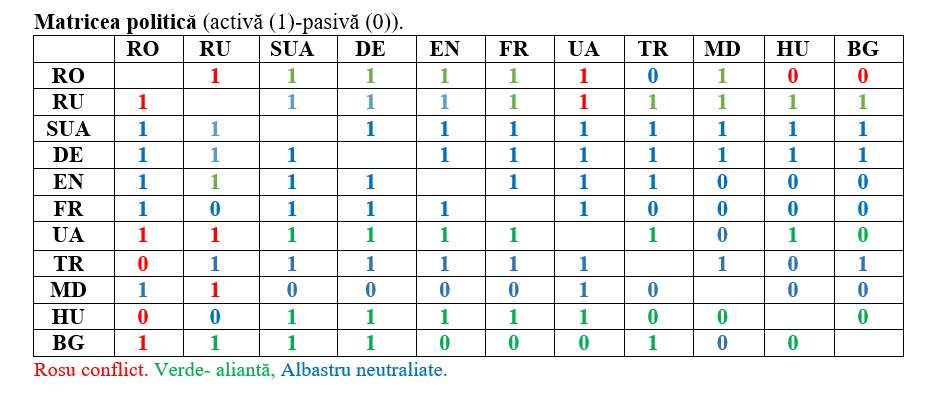
Figure 4. Graph of frustrationSource: made by the researcher. The order of importance of states for Romania vs. the question of the
Union - Russia, USA, Germany, France, England, Ukraine, Turkey, Moldova,
Hungary, Bulgaria, Yugoslavia.
Figure 5. The political matrixSource: made by the researcher.
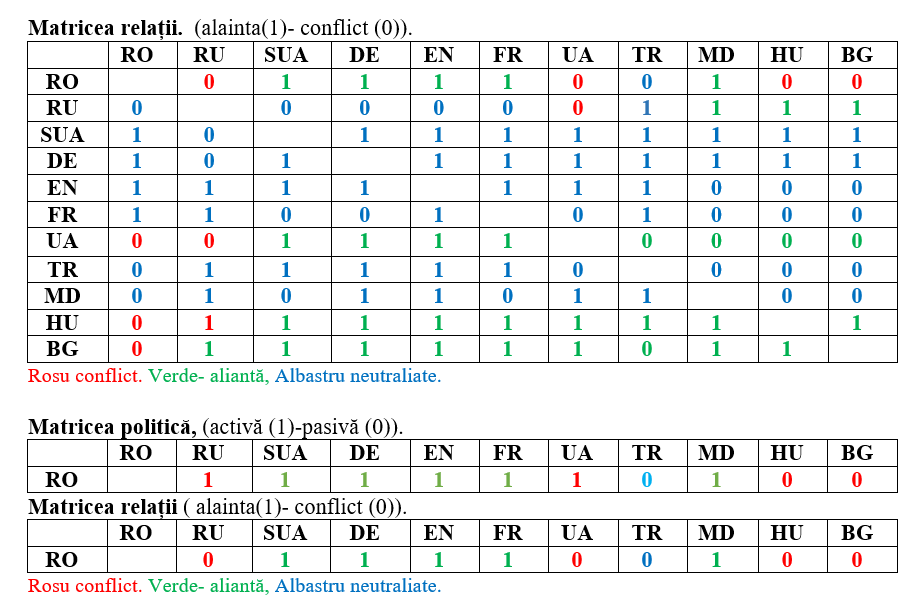
Figure 6. Relationship and policy matrix.Source: made by the researcher. Using the
content-color binomial, we further easily decipher the relations between
states. Example1. Romania. The
political matrix. Will pursue an
active policy in conflict with Russia. With the USA, DE, EN, FR, UA, MD will
pursue an active policy and ask for support. With Ua, Un, Bg will pursue a
passive policy and will be in a state of conflict. Example 2. Romania.
Relationship matrix. With Russia, Ukraine
will not make alliance and will be in conflict. With the USA, DE, EN, FR will
make a compliment and ask for support. Does not form an alliance with the AU
and will be in conflict. With TU he will not make a fuss and demand neutrality.
With Hu, Bg will not form an alliance and will be in conflict. Looking at the
matrices as a whole, we see an extremely complex mosaic situation for Romania
and the subject of the Union. Romania's effort on
this subject requires a titanic thing on the diplomatic and geopolitical chain.
An effort that Romanian diplomacy is not able to overcome on its own in the
coming decades. Once the postulates of the Union were declared in 2012 and then
in 2018, they did not achieve their goal, without diplomatic and geopolitical
support. Respectively, the doctrine of the Union is automatically transferred
from the area of social and international relations (failed) to
the area of symbolism and traditionalism. The frustration
implanted 200 years ago was reinforced by populist activities and campaigns
lacking diplomatic effort. With each failed activity, the frustration will
intensify. Finding a people in a state of consolidated chronic frustration
allows reflective manipulation in any geopolitical direction. And the Union,
which has become the currency of exchange in the reflexive game of the Great
Powers, becomes a brand, a dubious financial scheme, an element of mass ethnic
schizophrenia and no geopolitical support of the Union. In the following,
for each country the semantic sequence of its foreign policy can be extracted. High-performance
doctrines in geopolitics and diplomacy are the only support of the Union. Reflective Aspects of the Concept of Moldova's Accession to the NATO Block NATO's
military-strategic accession took root in the socio-political space of Moldova
after the military failure of 1992, when the leadership of the Republic of
Moldova realized its military-strategic inferiority in the face of a major
military danger. Although Moldova participates in the PFP and IPAP program,
NATO does not come up with the accession proposal and is in no hurry to carry
out a deep restructuring of the Moldovan army, limiting itself to outdated
technical assistance and non-lethal weapons. Moreover, NATO promotes the
limitation of the military capabilities of small states, which may conflict
with its doctrines in the event of the coming to power of Eastern-oriented
governments. The concept of joining NATO is used by the unionists as an
argument for Moldova's insecurity towards the eastern military factor, but
joining NATO is promoted without a prior reflective study. Therefore, the
concept of joining NATO remains in the emotional sphere of its followers, who
do not possess knowledge of reflective analysis of this concept. Next we turn to the
Theory of Reflective Games of prof. Vl. Lefevr. Suppose generically
that in the period 2022-2024 for Moldova the time has come to choose its course
between the doctrines of neutrality and NATO membership. We notify the
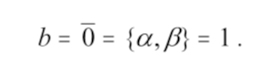
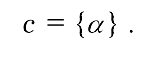
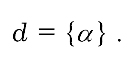
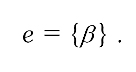
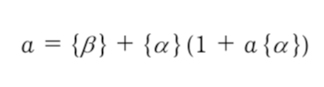
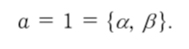
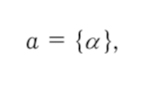
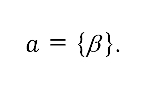
maintenance of neutrality by α, and the accession to NATO by β. The
alternatives will look like this: 1 = {α, β}
- unachievable (dual choice) α- maintaining
achievable neutrality, β- NATO (EU)
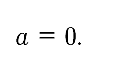
accession achievable. 0 = {} - maintaining
the achievable status quo Whether in Moldova
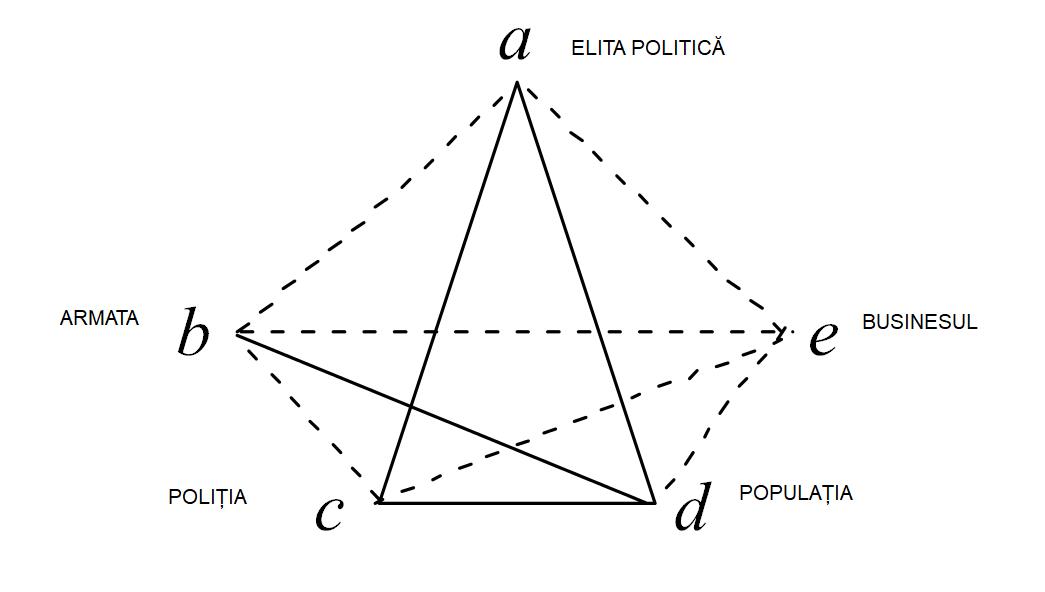
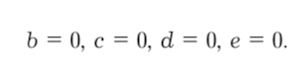
we have the following arrangement of forces: a- political elite b- army, c- the police d- population e- business We assume that the
political elite is in alliance with the population and the police. The army is
in alliance with the population and in conflict with the political elite, the police
and the business community. The police are in alliance with the population and
the business is in conflict with all social actors. In this case the graph of
realities will look like this.
Figure 7. Graph of
institutional relations.Source: made by the
researcher.
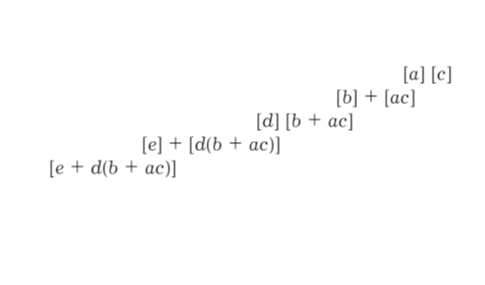
Figure 8. Diagonal formula of relationsSource: made by the researcher. We assume that the
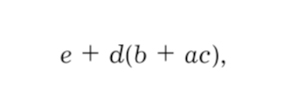
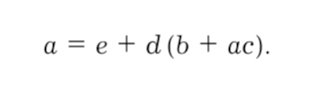
choice of course must be made by the political elite. The other actors can
influence this choice. The formula will look like this.
The formula for the political elite will look like
this.
Either the army will ask the political elite to end
the dualist course and make a concrete decision.
The police will ask for neutrality.
The population is also prone to neutrality.
Business demands NATO (EU) membership as a more
appropriate solution.
By unifying these binomials we obtain
Forwards
Respectively in this arrangement of forces the elite will
choose the active course of accession to NATO (EU) and dualism will not be
accepted.
In the account we will take care of another arrangement of
priorities, when all actors prefer to keep the status quo present.
When actors prefer neutrality
Or when actors prefer to join NATO (EU)
In all cases we see that the political elite conforms to the
opinions of social actors. Let's imagine that the business (s) wanting to attract the
population (s), starts to build cheap infrastructure, housing, charity funds,
etc. This leads to a situation where the population does not want change and
ceases to press the political elite to join NATO or the EU. The influence of
other political actors remains unchanged.
Hence, changing the influences on the political elite, the
latter is brought to the choice of the NATO (EU) option.
Generalizing
both case studies, we come to the conclusion that in times of crisis social
actors are willing to change and reform, directing their electoral preferences
to reformers. In the event of the reformers' failure, the social actors will
gravitate towards other political preferences. In times of prosperity,
political actors prefer a predictable status quo. Bibliography Lavrov I.A., Maksimova, L.L. (1974). Problems of set theory and
mathematical logic. Technical Publishing House, Bucharest. Lefebvre
V. A. (2003) Algebra of conscience. Ed. publishing house Kogito-Tsentryu.
Moscow. Lefebvre
V. A. (1991) Formula of man. Ed. publishing house Progress, Moscow. Lefebvre
V. A. (2003). Reflection. Ed. publishing house Kogito-center, Moscow. Lefebvre
V.A. G. L. Smolyan. (1968) Algebra of
Conflict. Ed. publishing house Kogito-center, Moscow Lefebvre V.A.
(1973) Conflicting structures. Ed. First
publishing house, Moscow. Lefebvre V.A.
(2009) Lectures on the theory of reflexive games.. Ed. publishing house
Kogito-center, Moscow. Lepskiy
V.E. (in collaboration with Raputo A.G.). (1999) Modeling and support of
communities on the Internet. Ed. publishing house of the Institute of Psychology
of the Russian Academy of Sciences. Moscow. Lepskiy
V.E. (2016) Analytics of the assembly of subjects of development. Ed.
"Kogito-Center". Moscow. Lepskiy V.E. (2015). Evolution of ideas about
management (methodological and philosophical analysis). Ed. from your
Kogito-Center. Moscow. Lepskiy V.E. (2016). Management
technologies in information wars (from classics to postnonclassics). Ed. from
your Kogito-Center. Moscow. Lepskiy V.E. (2010) Reflexive-active
environments of innovative development. Ed. publishing house
"Kogito-Center". Moscow. Lepskiy V.E. (2009) Subject-oriented
approach to innovative development. publishing house "Kogito-Center".
Moscow. Lepskiy V.E. (1998) The concept of subject- oriented
computerization of management activities. Ed. Institute of Psychology RAS.
Moscow. Manin Yu. I . (2010) A Course in
Mathematical Logic for Mathematicians. Ed. Springer-Verlag. New York. Marcus A., Szanto Cs., Toth L. (2005) Logika
hales halmazelm´elet. Ed. Scientia, Cluj-Napoca.
Moscovici S., Buschini F. (2007) Methodology of
socio-human sciences. ed. 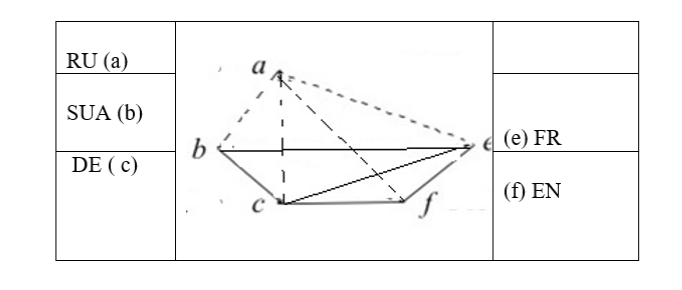
*Nicolae Parcevschii - PhD student (year III) Academy of Public Administration, Lieutenant Colonel R., Military Psychologist, Military Geographer, Republic of Moldova; Chișinău email: parcevschiinicolai@mail.ru
© 2010, IJORS - INTERNATIONAL JOURNAL OF RUSSIAN STUDIES